Dubai Fashion Week AW 26/27
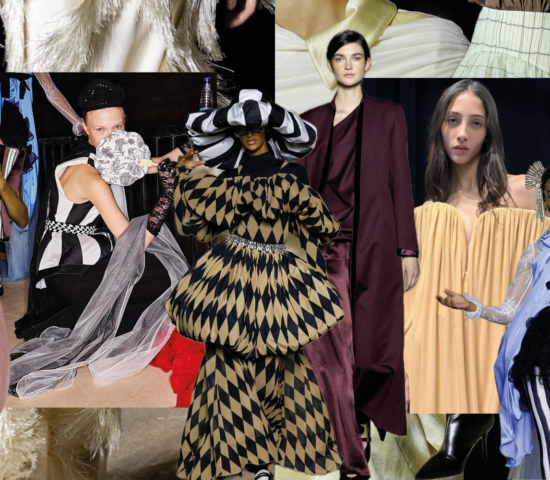
The AW26/27 edition of Dubai Fashion Week at Dubai Design District featured the regional debut of Alberta Ferretti under creative director Lorenzo Serafini, alongside John Richmond, Narma, Weinsanto and Asjad.

The AW26/27 edition of Dubai Fashion Week at Dubai Design District featured the regional debut of Alberta Ferretti under creative director Lorenzo Serafini, alongside John Richmond, Narma, Weinsanto and Asjad.
Dubai Fashion Week AW26/27 took place from February 1 to 6, 2026, at the Dubai Design District, bringing together international brands, regional designers, and retail initiatives within its official calendar. The edition was marked by relevant debuts, institutional presentations, and the expansion of the traditional runway format.
Among the names that attracted the most attention this season were Alberta Ferretti, John Richmond, Narma, Weinsanto, and Asjad.
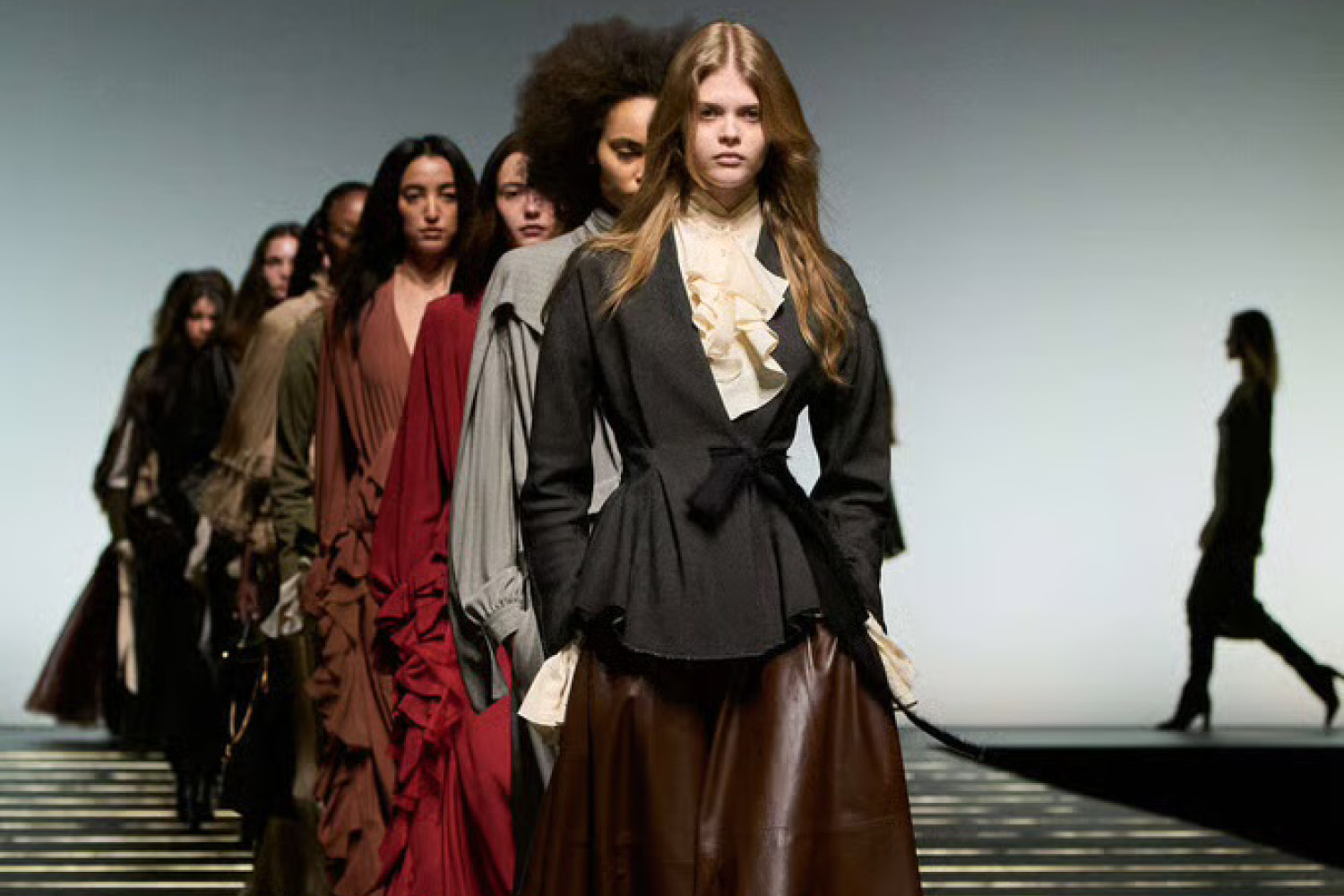
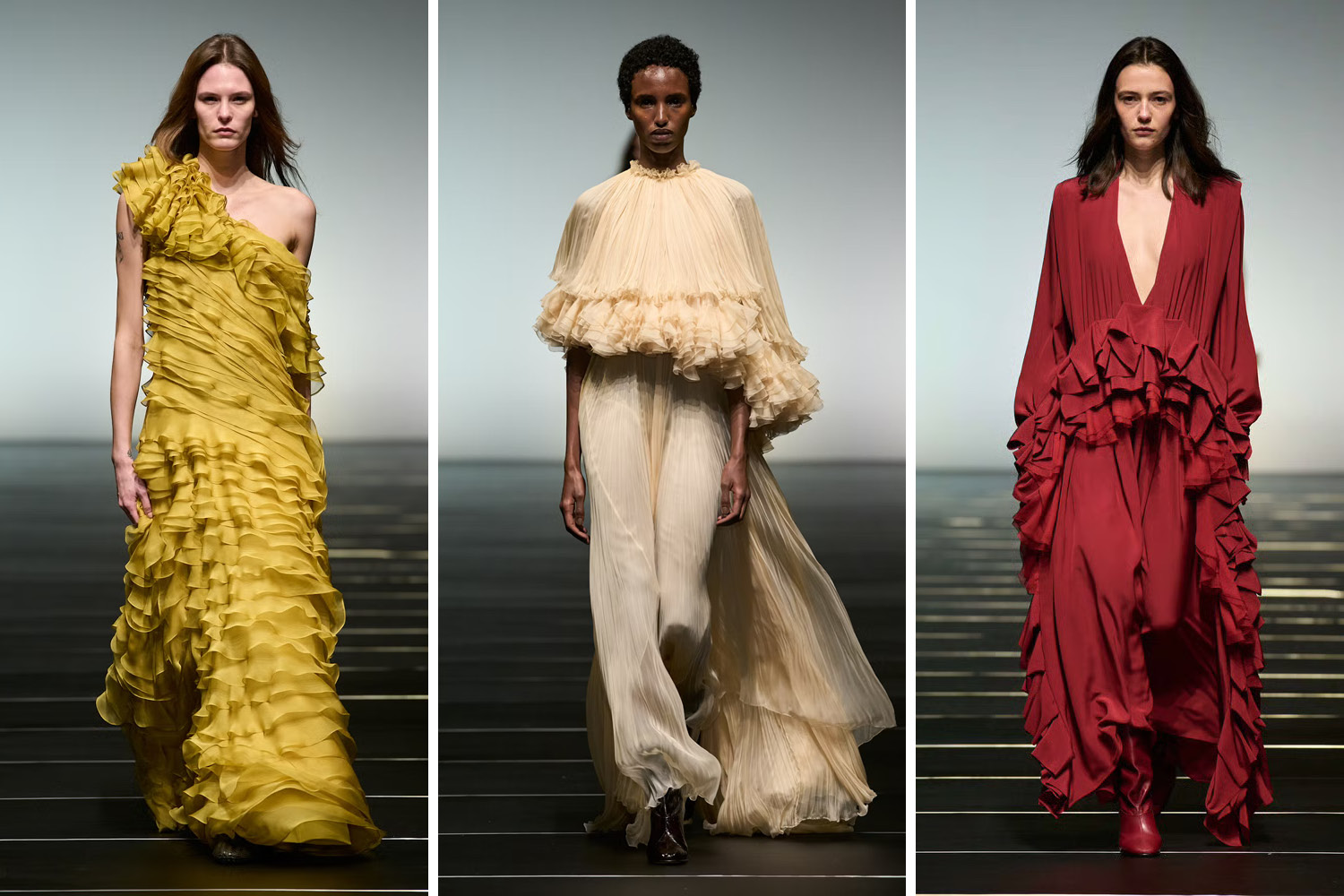
Alberta Ferretti opened Dubai Fashion Week AW26/27 with Portrait of a Lady, marking the house’s first official appearance on the Dubai runway. The collection was designed by Creative Director Lorenzo Serafini, who approached the season through controlled femininity and material contrast. Layered chiffon dresses were paired with structured tailoring and leather inserts, creating a tension between softness and structure. The color story remained disciplined, with black, ivory, deep ruby, and aubergine dominating the lineup.
The show positioned the Italian house in a market that values statement dressing, yet Serafini maintained restraint. Rather than spectacle, the collection focused on silhouette balance and construction. Alberta Ferretti’s presence as the opening guest signaled the week’s alignment with established European houses while maintaining a clear, coherent runway narrative.
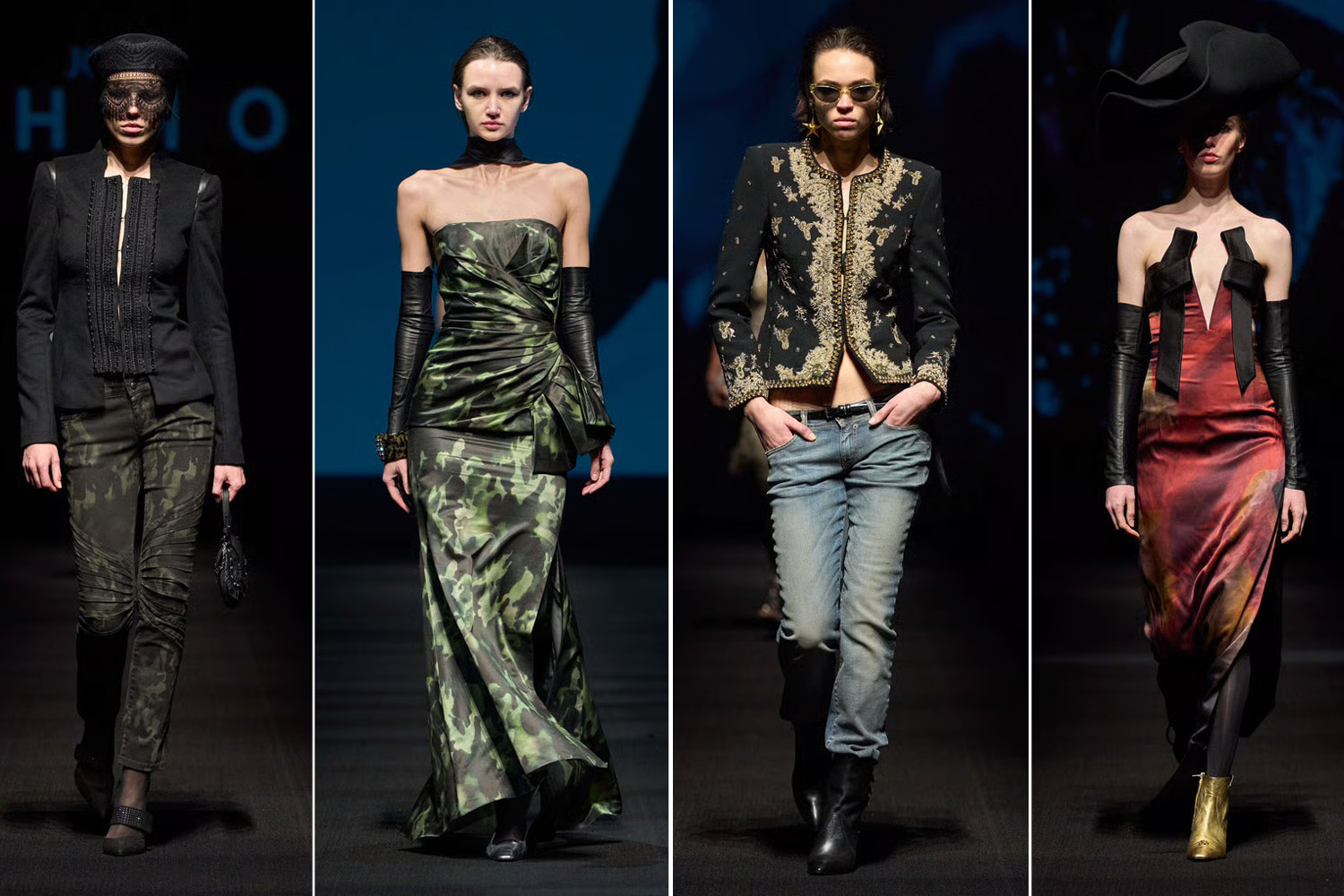
John Richmond made his Dubai Fashion Week debut with Viva Richmond!, reaffirming the brand’s long-standing rock identity. Leather outerwear, sharp tailoring, metallic accents, and body-conscious silhouettes defined the runway. The aesthetic remained rooted in the music culture that shaped the brand from the beginning, delivering looks that leaned into attitude rather than reinvention.
The presentation did not attempt to reinterpret the Richmond formula for the region; instead, it reinforced the brand’s signature codes in a new geographic context. In a lineup that included couture and conceptual proposals, Richmond brought directness and familiarity, structured jackets, fitted trousers, and statement detailing, anchoring the collection.
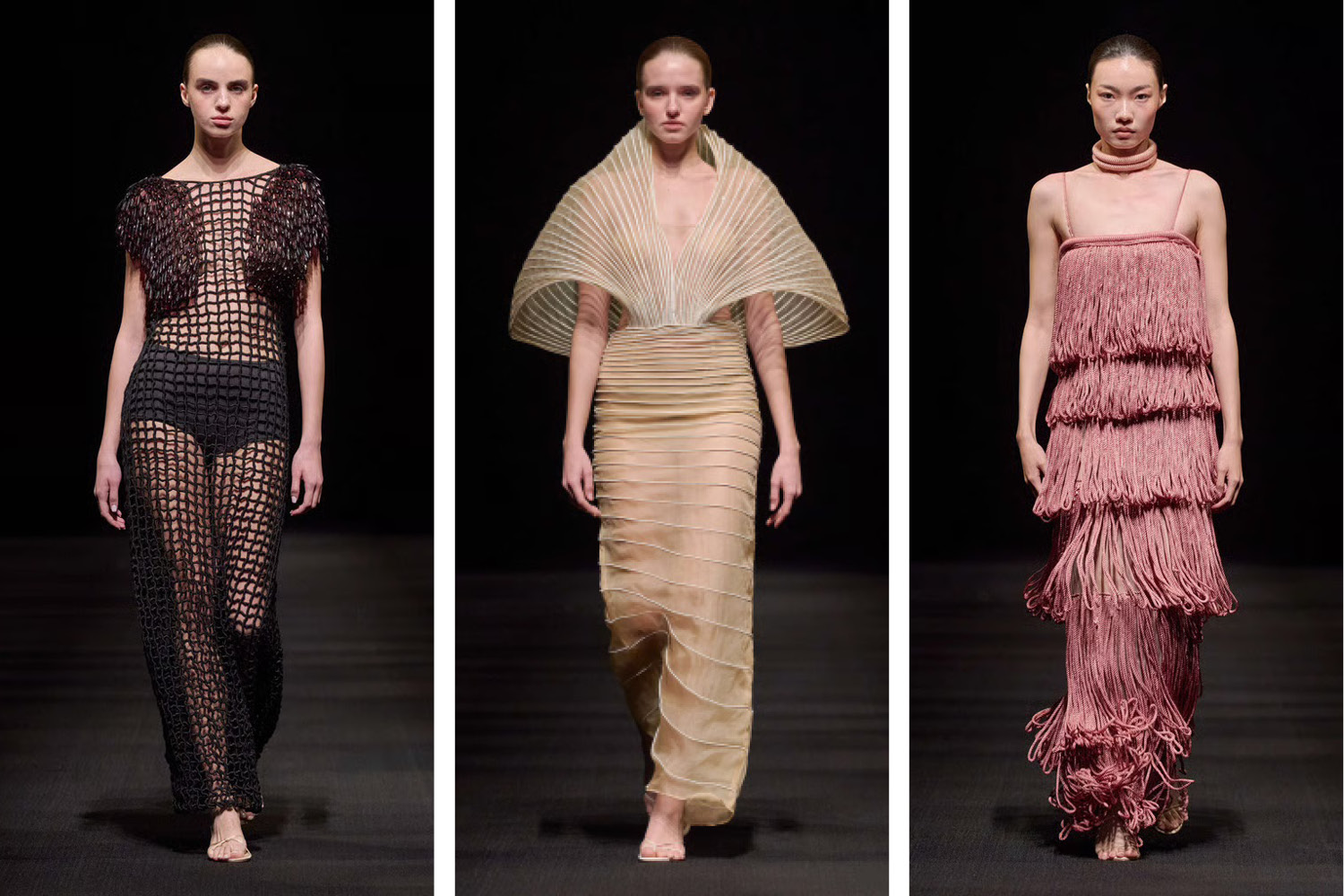
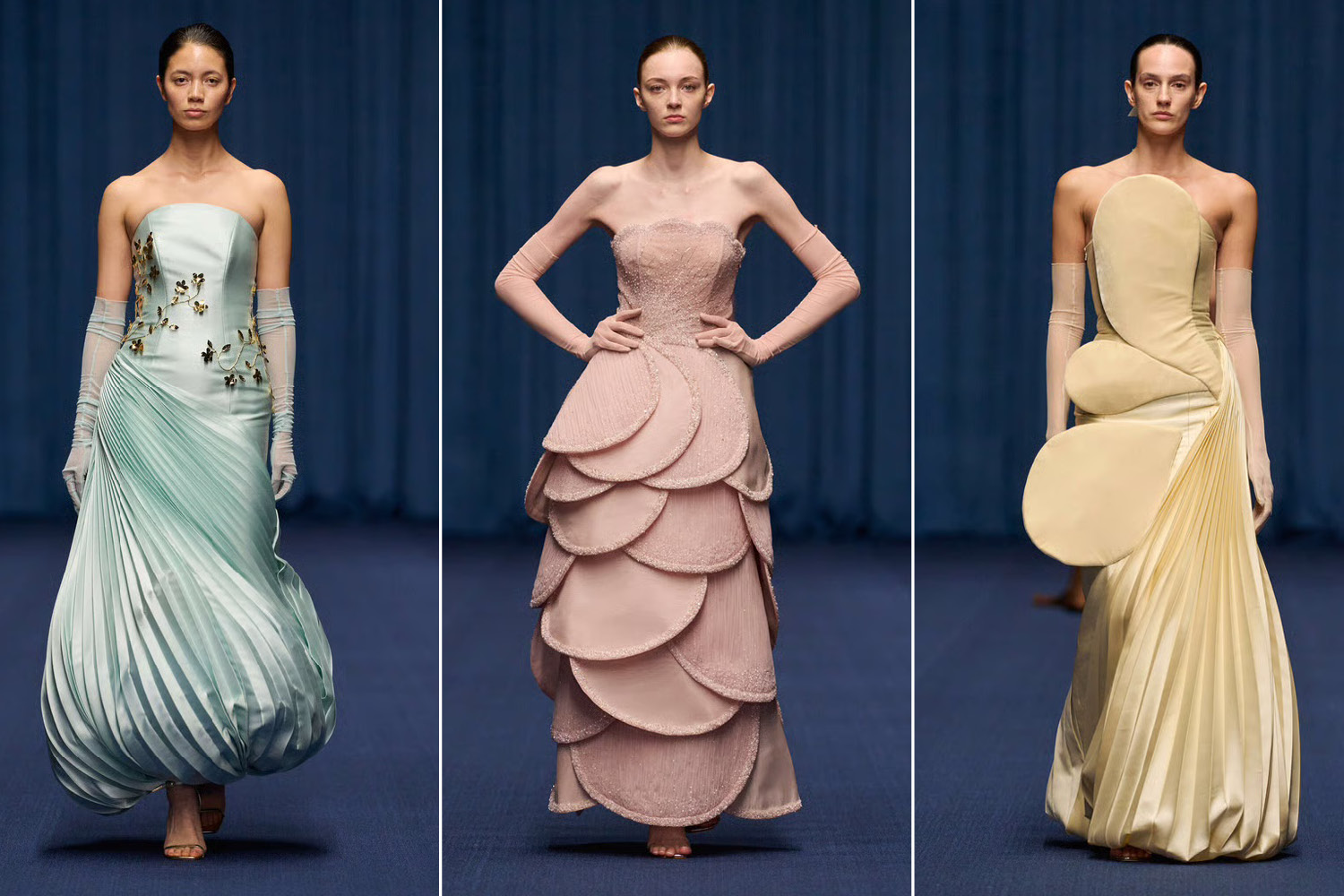
Narma presented The Agal, a collection that transforms the traditional agal into a structural design element. Rather than treating it as an ornament, the brand used its circular form as a foundation for sculptural silhouettes. Light tonal palettes, pearl applications, and crystal embellishments emphasized surface detail while maintaining clarity of shape.
The result was a focused exploration of form. Volumes were controlled and deliberate, with circular structures integrated into bodices and outerwear. Narma’s presence added a regionally grounded perspective to the calendar, using a specific cultural reference as a starting point for contemporary construction.
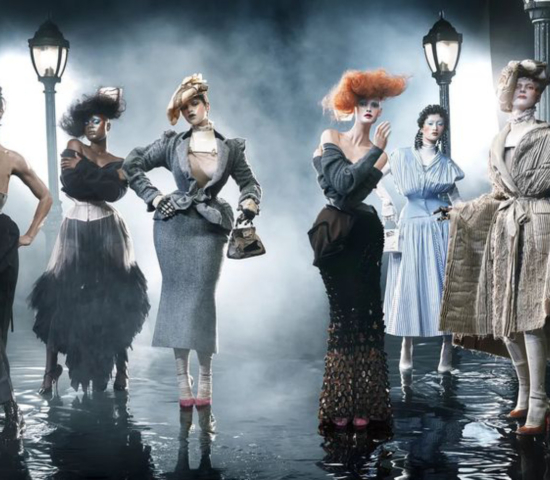
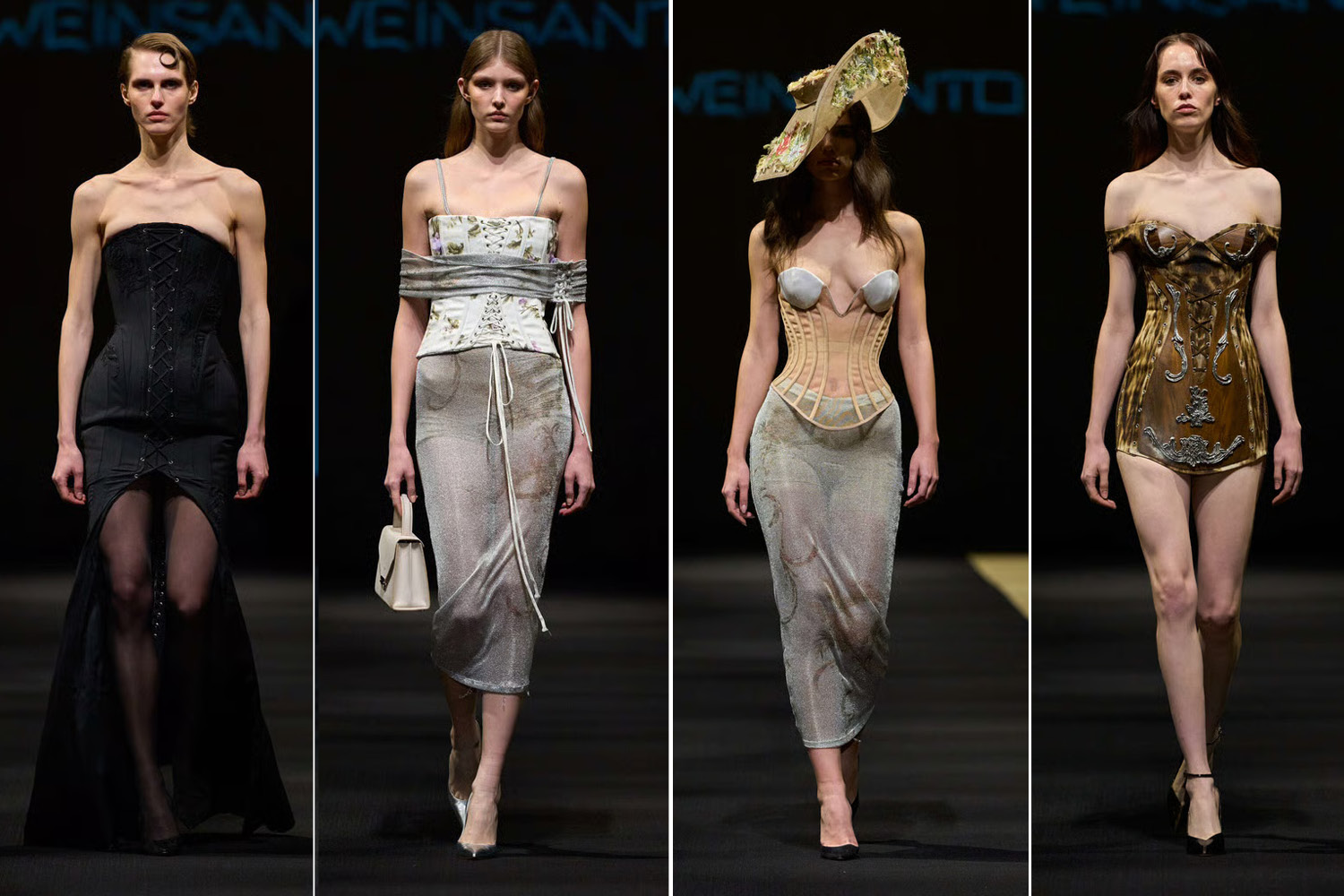
Weinsanto presented Les Irrésistibles Favorites, drawing on 17th- and 18th-century references without staging literal costumes. Corsetry defined the collection, with cinched waists and exaggerated hips shaping the silhouette. Structured bodices and visible boning emphasized garment architecture over surface decoration.
Skirts expanded outward in controlled proportions, and tailoring framed the torso with precision. The collection leaned into historical construction techniques, translated into sharp, modern forms. On the Dubai runway, Weinsanto delivered a couture-oriented proposal centered on silhouette manipulation and structural impact.
Asjad presented its AW26/27 collection at Dubai Fashion Week as part of the regional designer lineup, bringing a proposal rooted in contemporary eveningwear and occasion dressing. The collection focused on elongated silhouettes, fitted bodices and structured gowns designed to contour the body while maintaining fluid movement. Fabrics included layered tulle, satin and embellished mesh, with detailing concentrated around the waist and neckline.
On the runway, the brand emphasized surface work through embroidery, bead application and tonal embellishment rather than heavy print or pattern. The palette leaned toward neutrals and muted metallics, allowing texture and construction to carry visual weight. Asjad’s presentation reinforced its positioning within formalwear, maintaining a consistent approach to sculpted silhouettes and decorative craftsmanship within the Dubai Fashion Week context.
Credits:
Brands: Alberta Ferretti / @albertaferretti , John Richmond/ @officialjohnrichmond, Narma/ @houseofnarma, Weisanto/ @weisanto, Asjad/ @asjadesigns
Words: Maria Diegues/ @maadiegues