Why We Love (and Need) Performative Runways
Exploring fashion’s rightful place among the arts—as a discipline of movement and a powerful form of communication.

Exploring fashion’s rightful place among the arts—as a discipline of movement and a powerful form of communication.
After flocking from Milano Men’s Fashion Week, to Pitti Uomo in Florence, we see it necessary to grab a much deserved five minute break in order to really savor the aftertaste that these major events have left us. In this new era of design and innovation, as multiple fashion houses and creative directors try to further carve their way into the market, we go through runways like flipping through a magazine, our weary eyes scanning for elements that will set a collection apart, that will remind us of a name, incite a feeling, an urge to belong.
A runway is like a courtship, where all of us have a different type, a ritual of desire, a hunting ground where the prey is the spectator. What becomes clear is… each one of us has a different criteria for what we will find alluring and attractive, we choose where to set our eyes on at the end of the day, and the first step for that attraction is attention, a memorable image. May it be through silhouette, fabric choice, storyline or even model casting, one element, however that always seems to set a collection apart for better or for worse is the performance, the visual proposal of a collection.
The mating dance.
Evidently, it is not the first time that a runway performance gets flagged, blooms opinions or even parks debate among fashion insiders. But what is worth discussing is the particular debate sparked by Dsquared2’s fall 2026 runway show. Targeted by the accusation of being too performative.
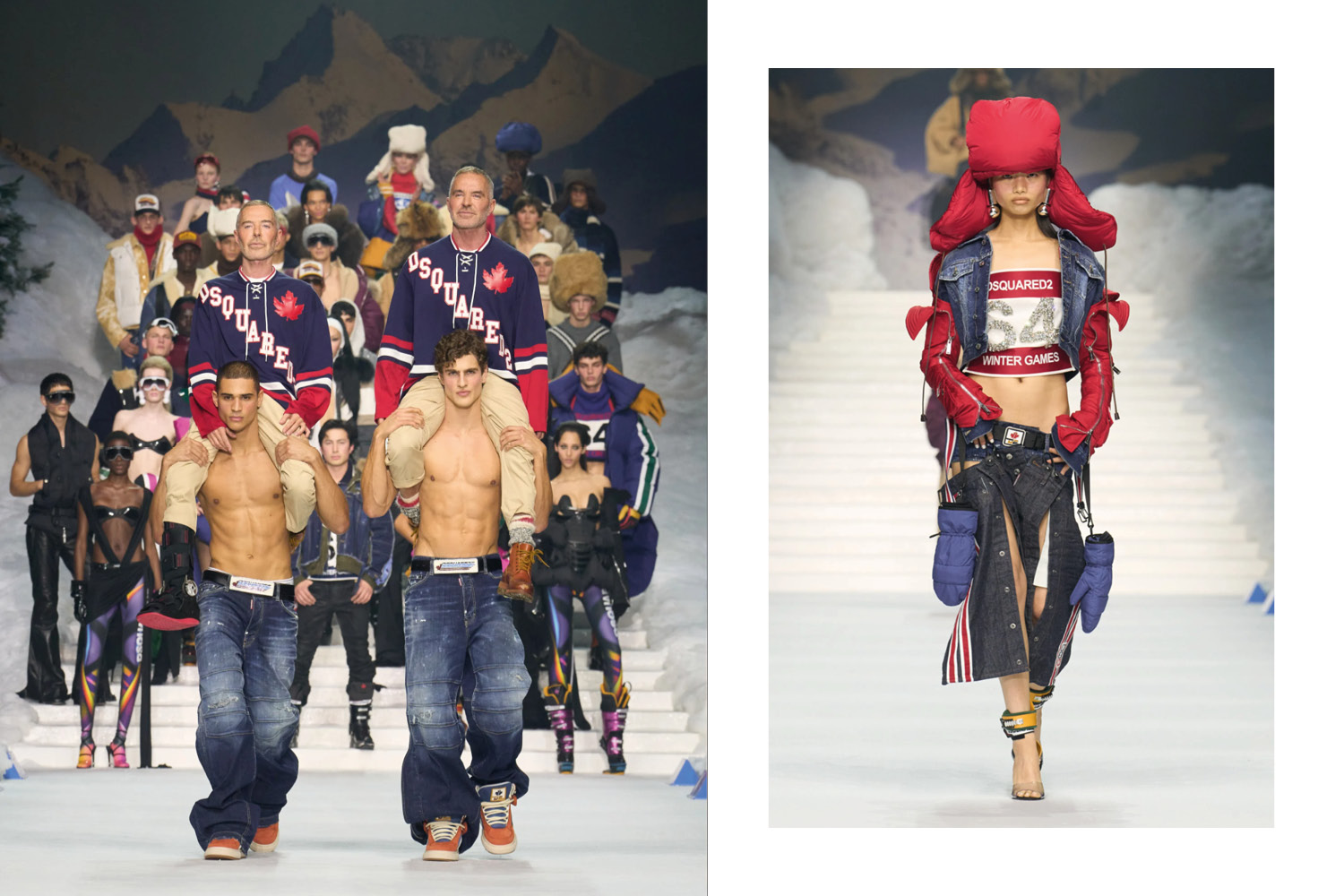
For this particular collection, the perfect alignment of events and planation, Crave’s TV series “Heated Rivalry” booming in popularity, the soon approaching 2026 Milano Cortina Olympic and Paralympic Winter Games, the unmissable, stingy cold winter air: inspiration hit, and creative directors Dan Caten & Dean Caten birthed a steamy ski-party, with sexy, dramatic layering, celebrity guests, and an unmissable finale.
Nothing out of the ordinary for this Canadian-born fashion house, flashy garments, clear iconography and hybrid construction, theatrical storytelling, and brand showcasing by a short performance by the caten brothers, being carried out by tall, chiseled models while wearing jockey jerseys of their own design.
While short, this micro performance sparked various opinions from the fashion community, digging out a number of past critiques regarding the “overdramatization” of the runway and the constant performances being “unnecessary”.
It is important to note that Dsquared2 is only one of many brands that partake in runway performances, in fact, theatrics have been implemented in the delivery of runways in various ways as early as the 1910’s, when we went past salon walkthroughs in silence and models being referred to as moving mannequins. The fashion industry boomed with staged events that revolved around music, environment, drama and of course, models immersed in the role their garment suggested.
Eventually fast forwarding to the early 20th century, jewels of fashion history began emerging with the popularization of modern fashion, super models, uber models began to rise, immersed just as much in their own performance while serving the audience with a fantastic garment.
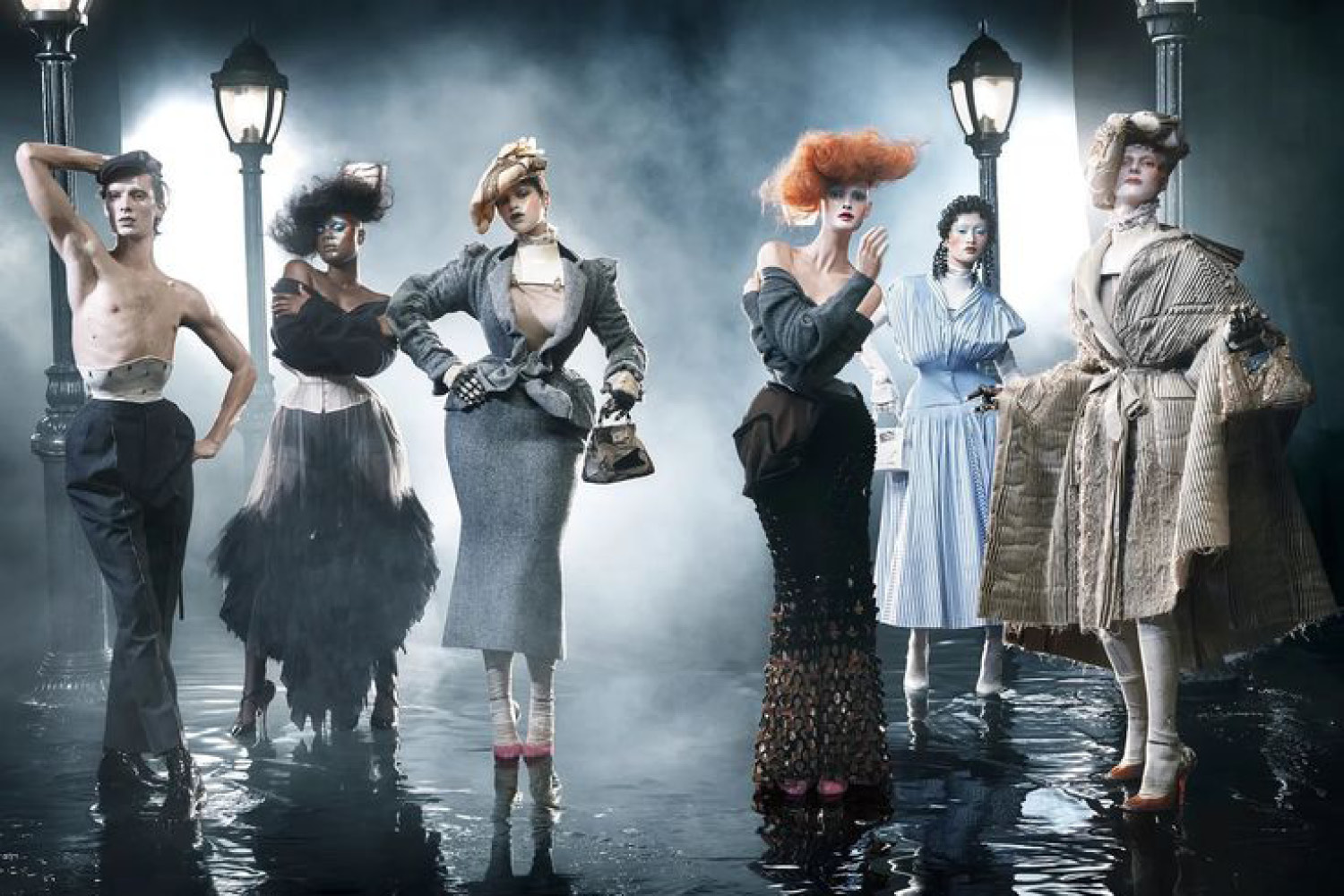
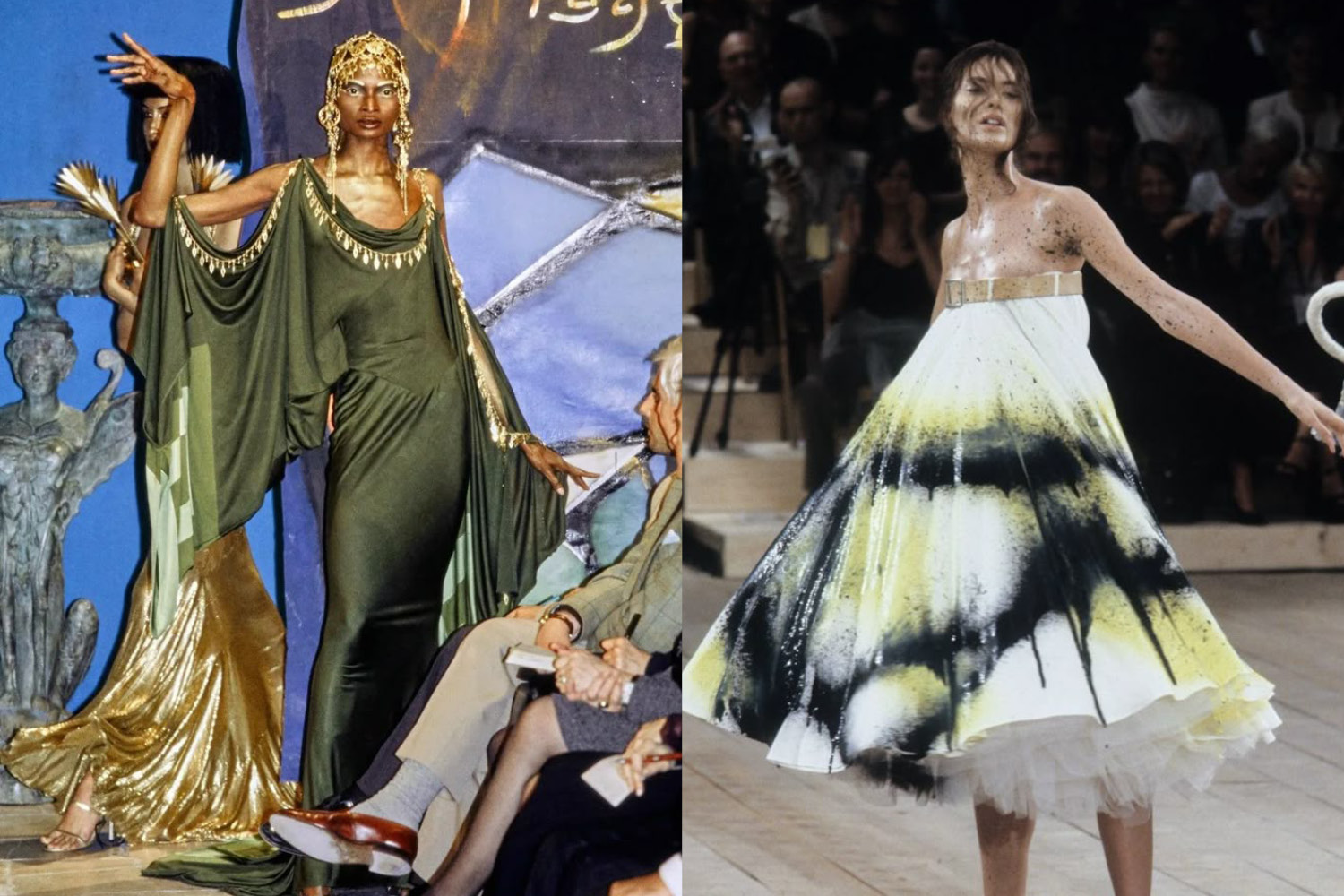
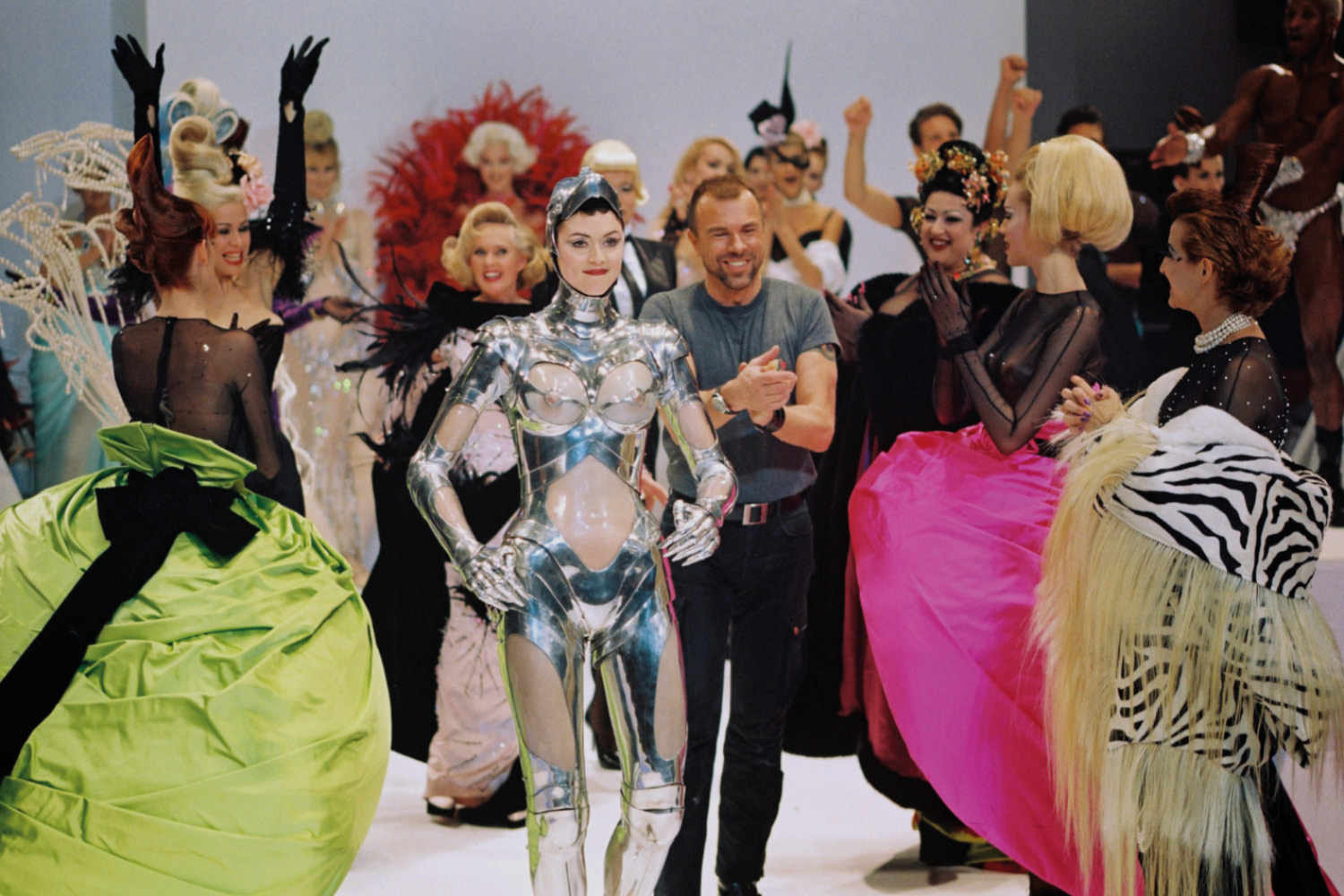
A wonderful deliverance happened, a communication between the designer, the models and the audience, a chain of ideas and pure inspiration coming from all directions, the audience, the world was stunned. John Galliano for Christian Dior Haute Couture Spring/Summer 2004, had models adopting ceremonial Egyptian poses, super models sitting in thrones, dancing. When Thierry Mugler’s models prowled into the runway Spring/Summer 1997 personifying insects, Alexander Mcqueen SS1999 having super model Shalom Harlow be antagonized by a robotic arm with spraypaint, Rick Owens’s incorporation of ritualistic performances, Maison Margiela’s Artisanal Fall/Winter 2024 models stumbling in a disoriented haze under a tunnel.
There’s an infinity of memorable performances mounted and constructed by the fashion industry, managing to spark conversation among people both in and uninvolved in the fashion world. It is very important for us to remember these moments in fashion and in the arts, and remember them fondly. These conversation starters have managed to connect us beyond the appreciation of a fully fashioned garment, but the incorporation of said garment in our universe into our diversity of thought and creation. These performances have allowed us to be able to give each other not just a product but a memory, an experience, an afterthought, an aftertaste.
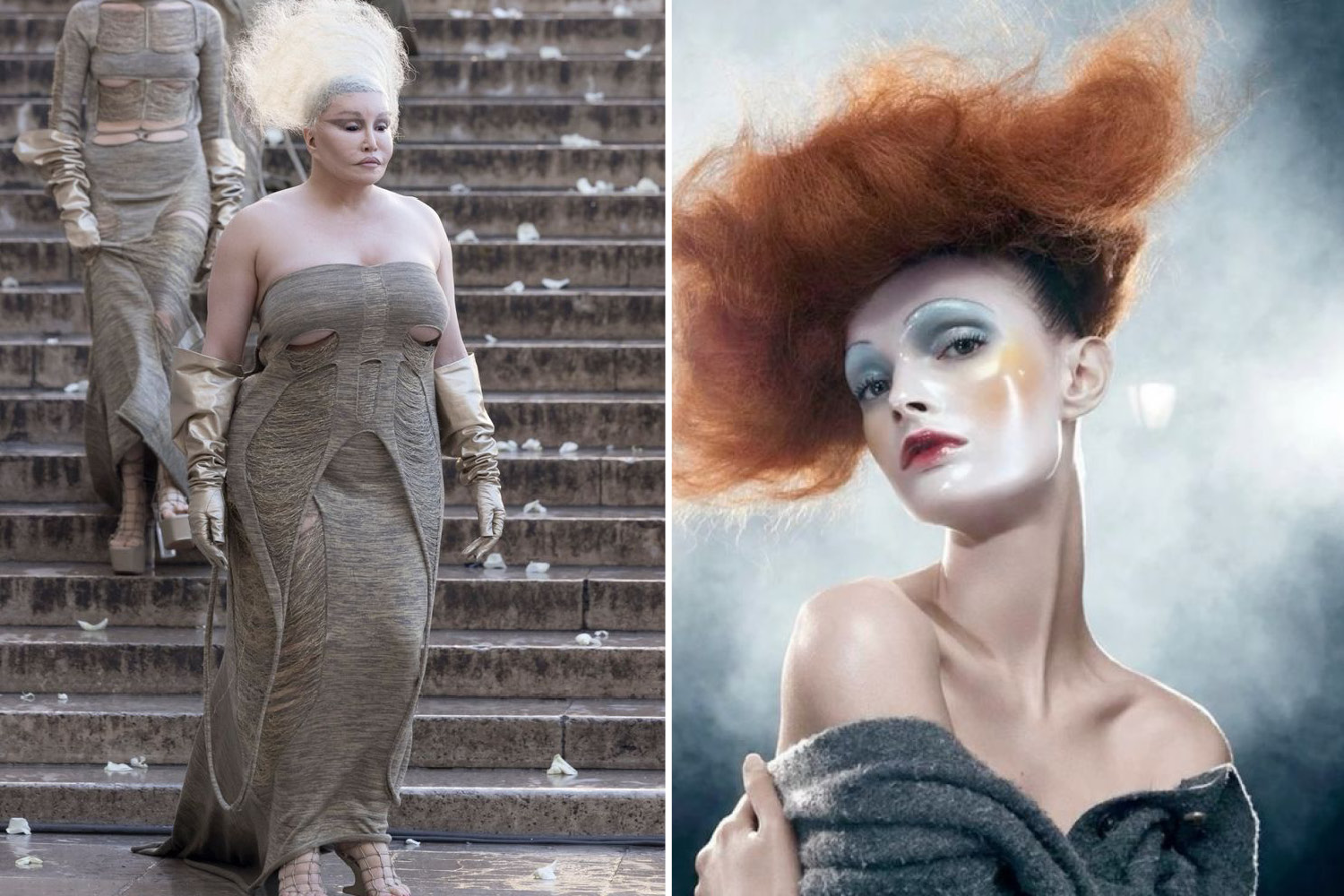
Fashion deserves recognition not only as aesthetic expression, but as history in motion, a language through which society communicates, resists, and reimagines itself. It is impossible to escape fashion and the world of garments; its constant evolution mirrors the shifts of the societies that produce it. To recognize movement, ideology, and entire worlds through the language of dress is to acknowledge fashion as a vital artistic medium, one that must be valued, preserved, and critically engaged with.
“Fashion is about fantasy as well as being commercial… You have to push forward and realise the power of fantasy and escapism.” — Alexander McQueen
Credits:
Brand: Maison Margiela / @maisonmargiela, Dior / @dior, Mugler / @muglerofficial, Dsquared2 / @dsquared2
Words: Ethel Romeo / @_bby_ella_