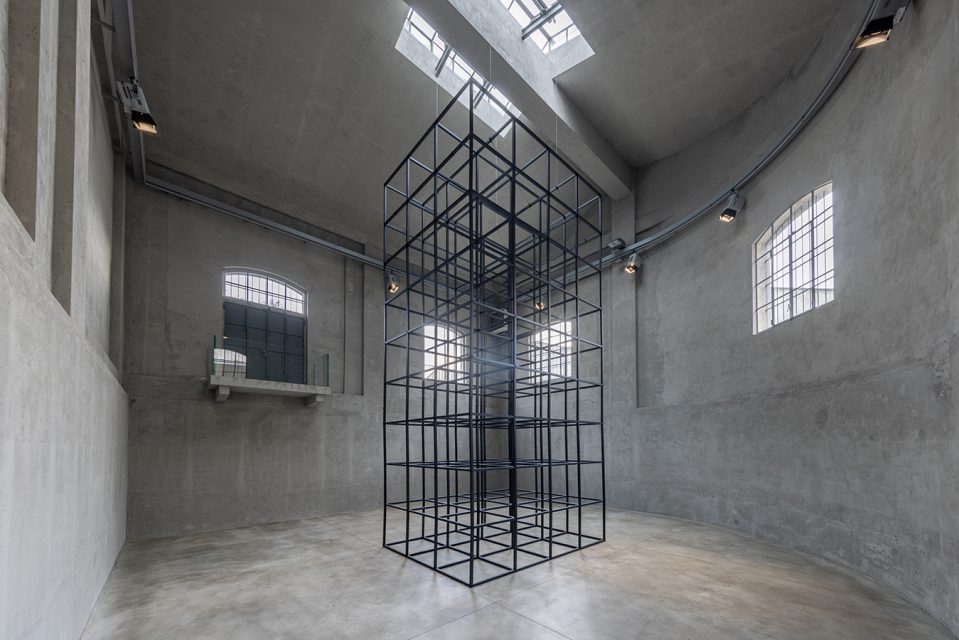
The Cisterna, that cathedral of former industry, all soaring concrete and industrial memory, has been handed over entirely to Hatoum’s vision. What unfolds inside is neither exhibition nor installation in any conventional sense. It is a choreography of dread and wonder, structured around three motifs she has spent a career making her own: the web, the map, the grid.
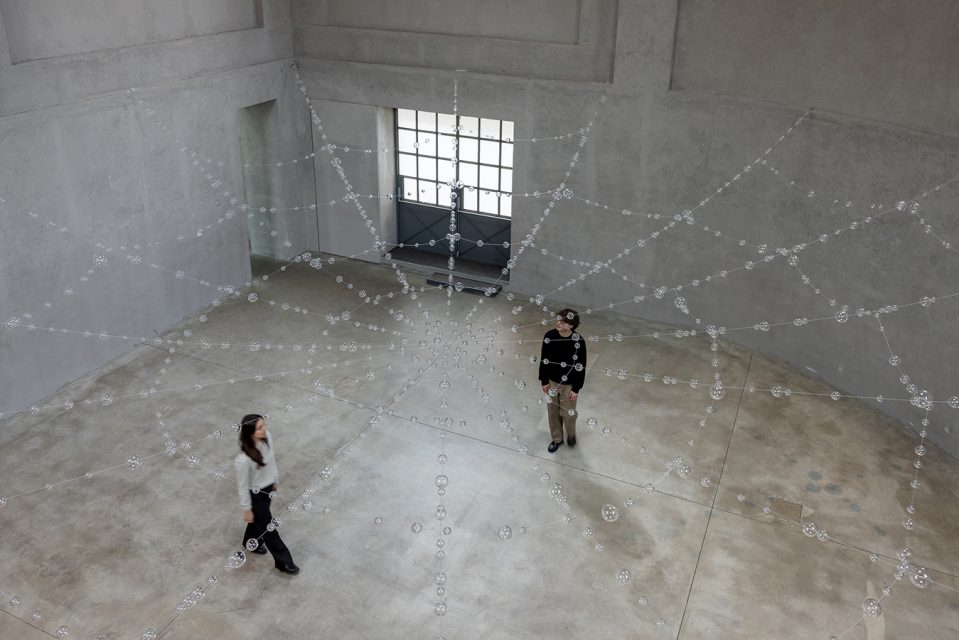
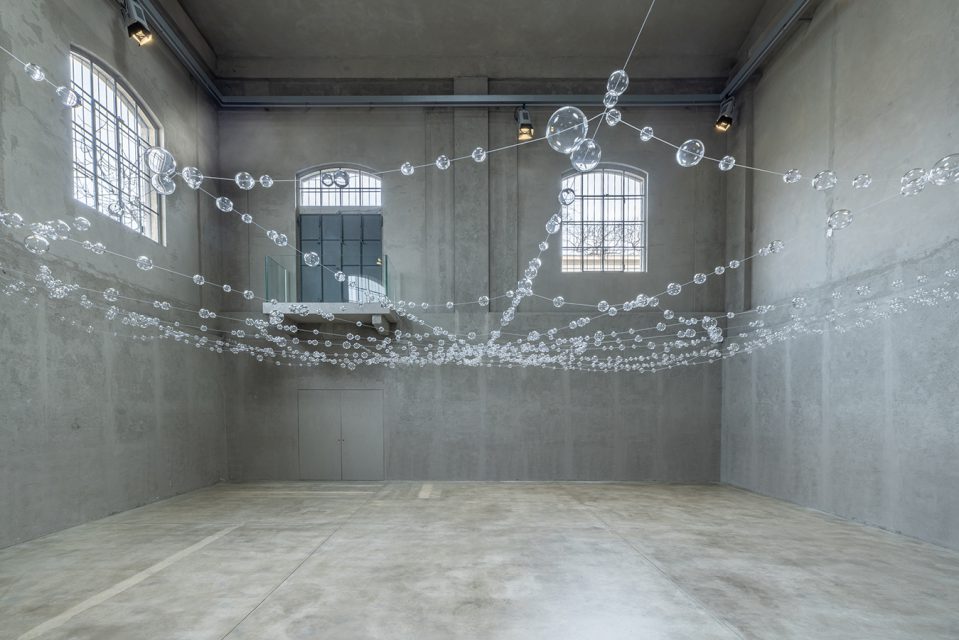
You enter beneath a sky of glass. Thousands of hand-blown glass spheres, threaded on wire so fine it seems to disappear, form a vast spider’s web suspended overhead. It is, objectively, ravishing. It is also, unmistakably, a trap. Hatoum has always understood that the most seductive structures are often the most coercive, that safety and entrapment can wear identical faces, and here, that understanding becomes something you feel in your chest before you think it in your mind.
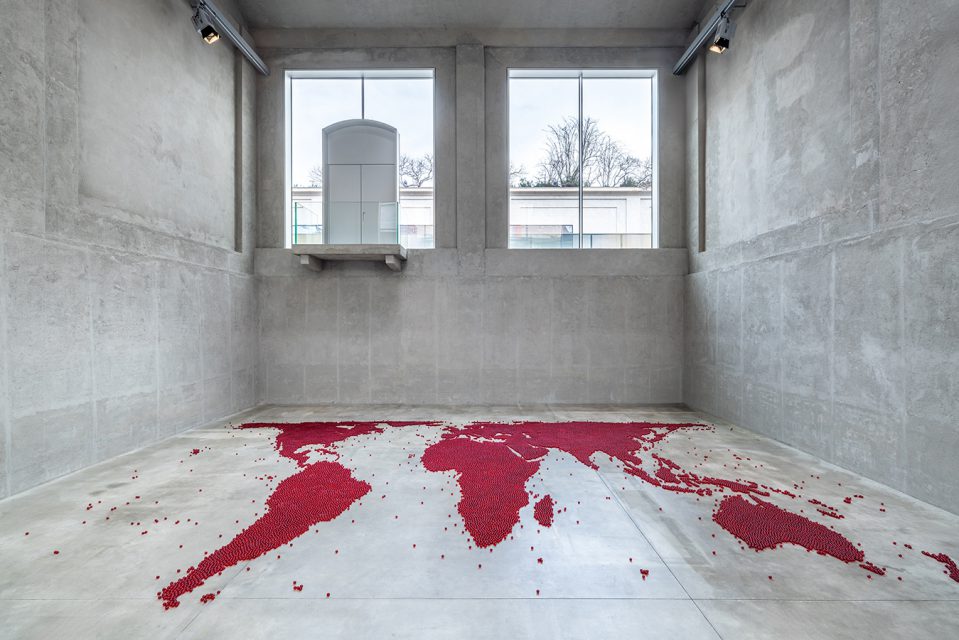
The central room stops you cold. Across the concrete floor, more than thirty thousand translucent red glass spheres pool and gather into the shape of a world map, rendered without borders, without the hard lines that politics insists upon. The projection chosen is the Gall-Peters, a cartographic act of conscience that refuses the distortions that have long kept certain continents small and certain powers large. The continents are recognisable. The boundaries are gone. What remains is pure, undivided earth, and the quietly radical suggestion that the world, unmapped by authority, might look something like this.